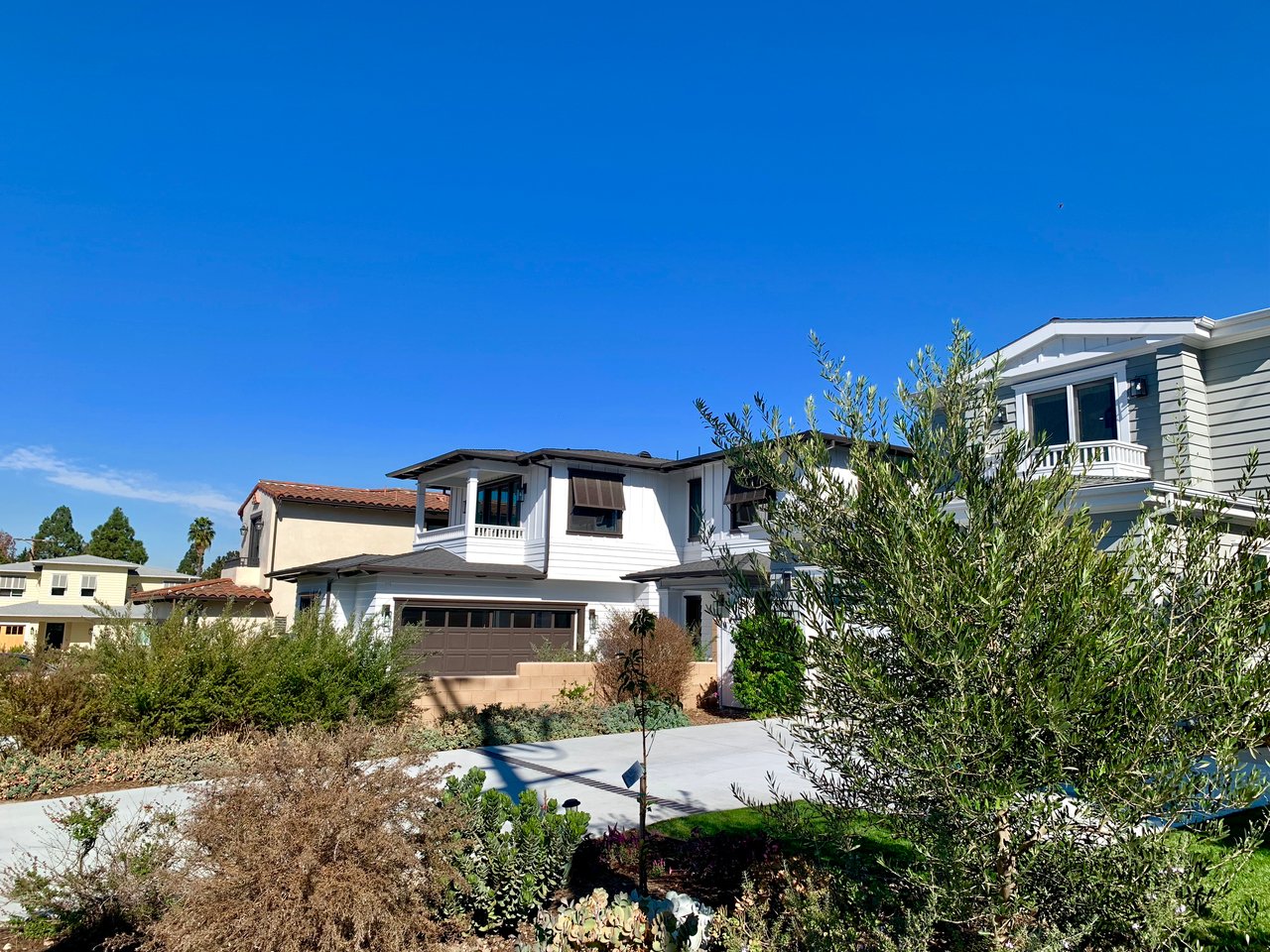
Someone you love has passed away. You've been named executor, administrator, or trustee. And now, while you're still grieving, you're trying to figure out what to do with the house.
The house that may have been in the family for decades. The house that may represent the single most valuable asset in the estate. The house that everyone has an opinion about, and where those opinions are increasingly in conflict.
I understand how this feels. And I want to give you the most useful thing I can offer right now: clarity.
I'm Danielle Edney, a third-generation Angeleno, Los Angeles real estate specialist, and Certified Probate and Trust Specialist. I work with executors, trustees, and heirs in Los Angeles County regularly, navigating the legal requirements, the court processes, the family dynamics, and the market strategy that produces the best financial outcome for the estate.
Here's what you need to know.
First: Does the Estate Require Probate?
Not every inherited home in Los Angeles must go through the formal probate process. Whether probate is required depends on how the property was held and the estate's total value.
California's probate requirements have evolved significantly. The threshold for primary residence is now $750,000 for deaths occurring on or after April 1, 2025. Given Los Angeles median home prices, most inherited properties will exceed this threshold, requiring formal probate.
Ways to avoid probate entirely:
-
Living Trust: If the deceased placed the home in a revocable living trust during their lifetime, the property transfers to beneficiaries through the trust, no court process required
-
Joint Tenancy with Right of Survivorship: The surviving owner takes title automatically without probate
-
Community Property with Right of Survivorship: Married couples who hold property this way avoid probate for the surviving spouse
If none of these apply: Formal probate through the Los Angeles Superior Court is required. And in LA County, that process has a specific timeline and set of requirements that every executor needs to understand.
The Los Angeles Probate Timeline What to Actually Expect
Probate in California is not fast. The full process takes 6 to 18 months for straightforward estates and can stretch to 2 to 3 years for contested ones.
Los Angeles County cases typically extend to 18 to 24 months due to court backlogs, where hearings schedule 30 to 45 days out and continuances occur frequently.
Here's a realistic step-by-step timeline for a Los Angeles County probate property sale:
Weeks 1-8: Filing the Petition File the petition for probate with LA County Superior Court. Pay the filing fee ($435 to $550). The court sets a hearing date 30 to 45 days out.
Weeks 4-12: Notice to Creditors Publish the notice in a local newspaper for three consecutive weeks. Creditors have four months from the date of appointment to file claims against the estate.
Weeks 6-10: Letters Testamentary If granted, the court issues Letters Testamentary. You now have authority to act on behalf of the estate, including selling property.
Weeks 8-16: Probate Referee Appraisal The court-appointed Probate Referee appraises all estate assets. For real property, this appraisal sets the floor price for court-confirmed sales at 90% of appraised value.
Weeks 12-30+: Listing and Sale
Weeks 30-52+: Final Accounting and Distribution
The total timeline depends heavily on one critical factor: whether you have IAEA authority.
IAEA Authority: The Most Important Factor in Your Sale Timeline
Whether you have IAEA authority (Independent Administration of Estates Act) determines how smoothly and quickly you can sell the property. IAEA authority lets the executor sell the property without going back to court for a confirmation hearing.
With Full IAEA Authority: You can sell the property much like a standard real estate transaction, with a 15-day heir notification period. No court confirmation hearing required. This dramatically compresses the timeline.
Without Full IAEA Authority: The sale requires court confirmation at a hearing where other buyers can submit competing bids, an auction-style process that ensures the property sells at fair market value and maximizes the return for the estate.
The court confirmation process adds 30-60 days to your closing timeline, and introduces the possibility of competitive overbidding, which can actually drive the price higher than the accepted offer. This is not always a negative for the estate.
Which authority you have is determined at the initial probate petition. An experienced probate attorney, who I can connect you with if needed, can help you request full IAEA authority upfront, which is almost always the right strategy.
The Probate Property Sale: Step by Step
Step 1: Secure the Property
From the moment of death, the property is your responsibility. That means verifying insurance is in place, utility accounts are current, the home is secured against intrusion or weather damage, and any ongoing maintenance is handled.
Carrying costs on an estate property are real: property taxes continue, insurance must be maintained, and any deferred maintenance that affects the property's value or safety must be addressed.
Step 2: The Probate Referee Appraisal
The executor must obtain a court-ordered appraisal from a Probate Referee before listing the property, establishing the fair market value on the date of death. This appraisal becomes the baseline for pricing and satisfies the court's requirement that the property sells for fair market value or better.
Prepare the property for this appraisal by removing clutter, addressing obvious safety hazards, and securing the home against damage. A referee's assessment is typically a drive by and becomes the court's baseline for evaluating whether your eventual sale price is fair. It’s important that your agent is communicating with the referee to support the value of the home.
Step 3: Property Preparation - Strategic, Not Exhaustive
Focus on removing personal belongings, deep cleaning, fixing safety hazards, and basic landscaping. Major renovations are usually not worth the investment in a probate sale.
High-return work like professional cleaning ($400–$800), fresh paint ($2,000–$5,000), and landscaping ($1,000–$3,000) should be completed before marketing begins, not after.
Most probate properties sell "as-is", which means buyers accept the home's current condition without requesting repairs. This is disclosed upfront and is standard in probate transactions. Buyers who understand the probate process, and there are many in the Los Angeles market, are comfortable with this structure.
Step 4: Pricing the Property
Price the property at or slightly above the appraised value to satisfy the court and attract serious offers. Underpricing wastes the estate's assets and signals weakness to buyers. A probate-experienced real estate agent understands these dynamics and knows how to position the property in Los Angeles where probate sales carry distinct buyer psychology.
Buyers often expect probate homes to be discounted, so professional staging, cleanup, and honest disclosure of the probate status actually increase confidence rather than dampen it.
Step 5: Marketing and Offers
The marketing campaign for a probate property is tailored to attract buyers who are specifically qualified for and comfortable with the probate process, including investors, families seeking a home in a specific neighborhood, and buyers who appreciate the transparency of a court-supervised sale.
I have a network of buyers and buyer's agents who specifically seek probate properties in southwest LA, and the marketing platform to reach motivated buyers broadly at the same time.
Step 6: Court Confirmation (if required)
If IAEA authority is limited, the accepted offer must be presented to the court at a confirmation hearing. At this hearing, other potential buyers can attend and submit their overbids. The court sets a minimum overbid amount, generally around 5% more than the initial offer. This competitive bidding process can lead to higher offers and often attracts investors familiar with probate sales.
Step 7: Close, Final Accounting, Distribution
File the final accounting with the court. Pay all debts, taxes, and fees. Distribute the remaining proceeds to the heirs. Close the estate.
The Probate Costs, What the Estate Pays
Most of the costs come out of the estate's proceeds at closing. You rarely need to pay anything out of pocket if the property has equity. California Probate Code Section 10810 sets the attorney and executor fees by law, based on the gross value of the estate.
For a straightforward probate estate in LA with one property worth $1 million, total costs (attorney + filing + appraisals + publication) typically run $5,000 to $15,000 out of the estate, assuming the executor waives their fee. The executor can waive their fee, many family members serving as executor choose to do this, which means more money stays in the estate for all heirs.
The Heir Conflict Question, Handling Multiple Opinions
This is the part of probate sales that nobody warns you about, and that I've navigated many times.
One sibling wants to sell. Another wants to keep the house. A third wants to rent it out. This scenario plays out frequently in LA, and it almost always comes down to money and emotions colliding.
My role as your probate real estate specialist is to present the financial reality clearly and objectively, what the property is worth, what the market will pay, what the carrying costs are while heirs delay, and to help move the conversation from emotional to practical.
Transparent conversations and strategic preparation compress delays significantly. The most successful probate closings share common traits: the executor secures full court authorization upfront, obtains the probate referee appraisal before listing, maintains a reserve account for debts and taxes, and hires professionals with documented probate transaction history.
Trust Sales, When Probate Isn't Required But You Still Need a Specialist
If the deceased placed their home in a living trust, you avoid the probate court process entirely. But the trust sale still has specific requirements:
-
The successor trustee must have authority to sell, verify this in the trust document
-
The trustee has a fiduciary duty to all beneficiaries, which means maximizing the sale price, not selling quickly for convenience
-
All beneficiaries should be notified of the sale, even if their consent is not legally required
-
The trustee may need to provide a certification of trust to the title company
As a Certified Probate and Trust Specialist, I work with trustees in Los Angeles regularly, helping them fulfill their fiduciary duties, navigate beneficiary expectations, and achieve the best financial outcome for the estate.
Frequently Asked Questions
Does an inherited home in Los Angeles have to go through probate? The threshold for primary residence is $750,000 for deaths occurring on or after April 1, 2025. Most LA properties exceed this, requiring formal probate. However, homes held in a living trust, joint tenancy, or community property with right of survivorship bypass probate entirely.
How long does a probate home sale take in Los Angeles? Los Angeles County alone processes probate cases with typical real estate timelines of 6 to 12 months from death to final distribution, though disputes or court backlogs can extend this to 18 months or beyond.
What is IAEA authority and why does it matter? IAEA authority lets the executor sell the property without going back to court for a confirmation hearing. Without it, the sale requires a court confirmation hearing where other buyers can submit competing bids. IAEA authority significantly compresses the timeline.
What is the minimum sale price for a probate property? The Probate Referee appraisal sets the floor price for court-confirmed sales at 90% of appraised value.
Should I renovate an inherited Los Angeles home before selling? Major renovations are usually not worth the investment in a probate sale. Focus on professional cleaning, basic repairs, and landscaping. The estate's fiduciary obligation is to maximize net proceeds, not to spend estate assets on improvements that may not generate full return.
How do I get started with a probate home sale in Los Angeles? Contact me directly at (424) 353-2761 or DanielleEdneyHomes.com. The first conversation is free, confidential, and focused on understanding your specific situation and what the next steps look like for your estate. Check out my PROBATE page for more information.
Ready to Navigate the Process With Someone Who Knows It?
Selling an inherited home in Los Angeles is one of the most complex real estate transactions you will encounter. Having a Certified Probate and Trust Specialist in your corner, someone who understands the court requirements, the market dynamics, and the family dynamics, is the difference between a smooth process and a prolonged ordeal.
Visit DanielleEdneyHomes.com to connect directly or call (424) 353-2761.
Danielle Edney is a Certified Probate and Trust Specialist and Los Angeles real estate agent specializing in Ladera Heights, View Park-Windsor Hills, Baldwin Hills, Culver City, Playa Vista, Santa Monica, Venice, and Mar Vista. As a third-generation Angeleno with 15+ years of experience, she is known for her concierge-level service, honest guidance, and ability to navigate complex transactions with professionalism and discretion.
Danielle Edney | Real Estate Agent | Los Angeles, California |
(424) 353-2761